

Advocacy strategies and resources
Juvenile justice
Juvenile Justice
Youth in the Juvenile Justice (JJ) system often face similar challenges to those in foster care, including instability and frequent placement changes. Since many foster youth also encounter the JJ system, it’s important for advocates to understand both systems, Dependency and Juvenile Justice (delinquency), to provide effective support. By focusing on core advocacy areas, advocates can help guide youth through these difficult transitions.
-
Important Things to Know
Welfare and Institutions Code (WIC) Statuses:
300 status refers to youth in dependency, or foster care, system.
602 status refers to youth in the juvenile justice system.
450 status refers to youth who have successfully completed probation and are now accessing AB12 (extended foster care) services through probation services.
241.1 Joint Assessment Hearing: If a youth in foster care encounters law enforcement, the county must determine which system will best serve the youth. The determination is made in a 241.1 Joint Assessment Hearing with a representative from both systems. Please note that CASAs have a right to be notified of this type of hearing and may provide a written statement advocating for the youth to remain in one system over the other.
-
Youth involved in the juvenile justice (JJ) system may experience a range of emotions and uncertainty about their situation and future. Take time to check in with your youth—use warm, supportive language to reassure them that mistakes do not define who we are and continue to instill hope and encouragement as they work toward their goals.
As a CASA, it’s essential to maintain clear and healthy boundaries. Under the guidance of your case supervisor, you will have conversations with your youth about:
Collaborating as a team with their Probation Officer
Understanding that volunteers are not “secret keepers”
Not discussing their case or the details of the crime; instead, encourage them to speak with their attorney about any legal matters.
Supporting them in completing and following their probation terms
*Please note that CASAs should be in close communication with their Case supervisor and SFCASA’s Juvenile Justice Lead, as they will offer support and guidance for any issues or questions.
“What should I do if my youth is arrested?” Do not panic. When a youth is arrested, CASAs work with their case supervisor and the youth’s team to evaluate next steps. This may be an uncertain and anxious time for you, your youth, and their family, but we are here to support you.
“What if my youth is detained?” The SFCASA “Order of Appointment” will allow you to contact and visit your youth in custody, regardless of county of placement. Please be in touch with your youth’s team to find out who their Probation Officer is. In San Francisco County, you or your case supervisor may reach out to the Juvenile Justice Center Clerk’s Office at (415) 682-5100.
*Please note: When visiting your youth in custody, please avoid visiting during school hours, afternoon shift change, mealtimes, and during family visitation hours.
Appropriate language
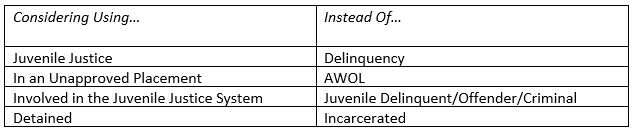
-
If the young adult you work with is charged with a crime in the adult system, here are the steps you should take:
Call the Public Defender’s office and request to speak with the public defender assigned to the young adult’s case (need full name & DOB). Youth may not have attorney appointed until first court date. Once connected, introduce yourself, explain your CASA role and ask the following:
for a summary of the charges and estimate of what to expect
to be kept in the loop with proceedings/hearings
how you can assist the case (character statements are common, providing background on the youth’s dependency system involvement, information about your relationship, humanize).
Talk to Public Defender about the possibility of the case being heard in Young Adult Court (YAC)*. If deemed appropriate, write a letter of recommendation to advocate for the case to be heard in YAC, citing youth’s background, and engagement with you as a CASA, and submit it to the Public Defender. The Public Defender will submit it to the District Attorney. Example recommendation letter here.
Connect the adult Public Defender with the juvenile attorney, PO, or AB-12 Social Worker.
If the young adult is detained, add some money to their commissary and write them a letter (include your phone number) so they know how to reach you. Use the office address as the return address to protect confidentiality.
Share programming inside jail with young adult.
Get on the visitation list and visit the young adult.
-
Fresh Lifelines For Youth (Fly Program) connects youth with positive mentors, builds their understanding of the law and their rights, and empowers them to become leaders in their communities. Their Law, Leadership, and Mentor Programs are grounded in ideas from youth once facing incarceration, and use their voices in youth development and crime prevention.
The Center for Juvenile and Criminal Justice: CJCJ serves Bay Area populations with special needs, including youth facing or transitioning from the juvenile justice system. CJCJ has a number of direct service programs for JJ youth. Please also visit CJCJ’s website for important updates engaging JJ reforms and changes in California.
San Francisco Diversion Program: The Huckleberry Community Assessment and Resource Center or CARC is a single point of entry for crisis intervention, assessment, service integration and referral of arrested youth ages 11-17, for misdemeanors or certain felonies. With a focus on positive youth development, CARC helps youth avoid detention and further involvement in the juvenile justice system. SF Police General Orders state that CARC must be contacted for all juvenile arrest cases.
Another great program through CARC is Project READY. Project READY, which stands for Reconnecting, Educating, and Achieving Dreams for Youth, ensures that 8th graders with behavioral or truancy issues successfully transition to high school and avoid contact with the juvenile justice system.
The Young Women’s Freedom Center (YWFC) empowers systems-involved women and TGNC people of color who have experienced poverty and criminalization to lead change. YWFC believes those most impacted by injustice are the true experts best equipped to drive transformative justice and lasting change.
To learn about a specific issue, please visit the topic of interest(s) below.