
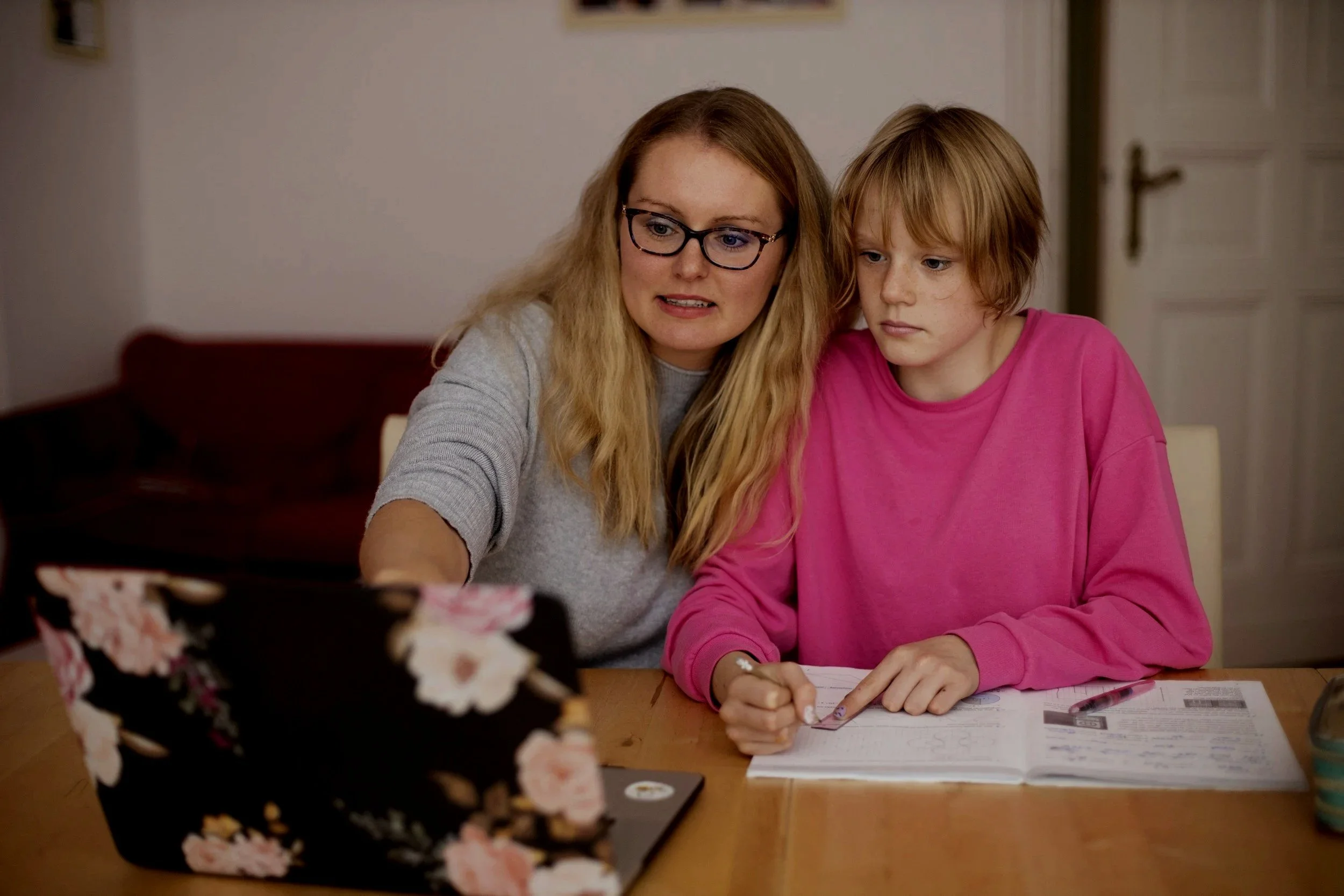
Educational advocacy
Educational Advocacy
…is a role within the Court Appointed Special Advocate (CASA) program focused on securing necessary academic services, resources, and stability for foster youth. CASA volunteers monitor academic progress, attend school meetings, and/or support plans to improve educational outcomes for foster youth.
To learn more, please click on the topic of interest below.
-
As a CASA, you are expected to support your youth’s education in these ways.
Include information about their education in court reports.
Determine who holds educational rights for your youth and inform the court when there is a need for a new ERH(this could be a youth's biological family member, foster parent, CASA, or other designated individual).
Make contact and develop a relationship with the district Foster Youth Liaison.
Monitor and support the youth’s school attendance
Request school records at the end of each school year, and upload to A.L.
Ask your student how they like school and about the quality of their education.
Document any concerns and discuss with your Case Supervisor to determine the best approach to share with their teacher, social worker, or foster youth liaison.
Consider school placement stability and advocate that the student remains in their school of origin if it is beneficial.
Ensure that the youth has an opportunity to make up work missed for court appearances, medical appointments, or other conflicts.
Learn about age-appropriate developmental milestones and help identify potential areas of delay.
If the youth is eligible for special education services, attend special education meetings and monitor progress towards IEP goals.
Encourage the student to participate in enrichment activities and tutoring if needed and if interested.
Both CASAs and ERHs have the right to:
All education records
Presence at all school meetings (including IEPs)
Request special education assessments
Request IEP meetings as needed (school transition, youth’s needs are not being met)
Communicate with school staff and foster youth liaisons
More resources:
Foster Youth Services and Liaisons in CA: Foster Youth Services Coordinating Programs (FYSCPs) support foster children in schools by coordinating health and school record transfers, appropriate placements, and services like counseling, tutoring, mentoring, and independent living training. Each district has at least one Foster Youth Liaison, with many schools having their own.
Foster Youth Education Toolkit: Must have Information and useful tools to support educational advocacy for foster youth.
-
Find the webinars necessary to become an Educational Rights Holder here.
When parents or caretakers are unable to manage educational support of a youth, those rights can be transferred to an Educational Rights Holder (ERH). The ERH serves as the point person for all decisions around the youth's academic and developmental needs. An ERH can be a foster parent, relative, family friend, or a CASA.
NOTE: Advocates serving as the ERH or Co-ERH are required to submit a JV-537 form. Those in dual roles (CASA and ERH) will write both a Court Report (minus educational information) and complete the JV-537 form. All education updates should be in the JV-537 and under the Education heading in the court report, please indicate "Please see filed JV-537."
The JV-537 form is a powerful and informative advocacy tool focused solely on educational needs and strengths. Please contact your assigned Case Supervisor for assistance to complete the JV-537.
As ERH, you will:
Attend all school meetings (SST, IEP, and/or disciplinary).
Sign off on enrollment
Sign off on special education services
Be primary contact for the school
Review academic records and monitor credit completion
Establish and maintain a collaborative relationship with those involved with the student’s educational experience.
Familiarize yourself with relevant laws supporting a youth's academic rights.
More information:
-
Youth in foster care are often several grade levels behind their peers. Intensive, remedial academic support can bolster a student’s confidence in the school setting and enable them to catch up to their classmates.
Community-based tutoring
To find tutoring opportunities, a CASA should first look to the youth’s community. Contact the Foster Youth Liaison at their school to inquire about school-based options or special district programs for foster youth, and research local tutoring programs.
SFUSD’s Foster Youth Services Coordinating Program provides free tutorial services to SFUSD students in foster care. Tutoring will be provided at the school site during or after-school or virtually, as needed. If you have any questions or concerns, please feel free to contact Ling Busche at buschel@sfusd.edu.
Free remote tutoring
If there are no accessible in-person options (or the youth prefers remote support), take advantage of our remote tutoring partners:
Learn to Be is a free online tutoring program for K–12 students in math, reading, writing, and English. Volunteer tutors provide sessions through a virtual classroom. Caregivers or CASAs can access student attendance, session notes, and evaluations. All tutors 18+ are background-checked and supported by the LTB online community.
To enroll: use our customized enrollment link: SFCASA Learn to Be Enrollment. Be sure to specify that you need a tutor who is 18+.
Jewish Coalition for Literacy (JCL)serves students in grades K-5 by matching struggling readers with an adult tutor. JCL tutors undergo initial training and receive ongoing education from literacy trainers. All tutors have passed background checks mandated by school districts in the Bay Area. Zoom workshops are available!
Andromeda Math Partners delivers free, high-quality virtual math tutoring to 8th through 12th graders, targeting students from low-income families in the SF Bay Area. Ideally, students in 8th or 9th grade would begin tutoring and receive services throughout high school.
Our New Student Registration Form is available and English and Spanish.
For-profit tutoring
Finally, if necessary, research for-profit tutoring centers in the youth’s area. Ask the tutoring center if they offer waivers, financial aid, or discounted rates for youth in foster care. Request financial support from the youth’s social worker and connect with your Case Supervisor to apply for a grant.
-
CASAs and ERHs play a pivotal role in supporting youth on their path to graduation. Please be in conversation with the youth’s school counselor to assess whether they are on track to graduate, and advocate for their academic success.
If the youth you serve wants to graduate, but is not on track to do so in the traditional way, They have options!
Diploma Track Graduation (AB167)
Foster youth who transfer school after their 2nd year of high school may be eligible to graduate upon completion of state requirements, which are generally fewer than local district requirements.
See this AB167 Graduation Eligibility form and checklist to assess the youth’s progress towards graduation. AB167 cannot be used to support a youth in graduating school early.
General Education Development (GED) Test
When a student passes their GED test, they receive a California high school equivalency certificate. Learn more about the process and requirements here.
California High School Proficiency examination
Each person who passes this exam is awarded a Certificate of Proficiency, which is equivalent to a California high school diploma. Find out more information about eligibility and deadlines.
HiSET exam
The HiSET is an exam similar to the GED. Learn more information here.
Credit recovery
Many community colleges offer high school credit recovery options, such as:
-
Research shows that while 86% of foster youth aspire to attend college, only 55% enroll, and just 11% complete a 2- or 4-year degree. The college transition can be especially challenging for foster youth.
Check out this site as a one-stop shop for important information to support a Foster Youth attending college after high school.
CASAs and ERHs can provide support and advocacy to empower and enable foster youth to apply, enroll and succeed in college:
share information and explore college options with the youth
support them to access financial support for tuition and living expenses
encourage care team to develop plan to help youth attain college goals
connect student with foster youth services on college campus
identify other supports and services needed
help them envision their future in college and beyond
encouragement to work hard, and to “hang in there” when college gets tough
—— College options——
Community College
Community colleges accept any student with a high school diploma or equivalent. At a community college, a student can receive an associate’s degree, complete credits to transfer to a 4-year university, or earn certificates for certain careers. Visit California Community Collegesfor community college options and application instructions.
4-year Universities/colleges
Students can apply for admission to 4-year universities/colleges as a high school senior or a transfer from a community college. 4-year universities are either public (UC or CSU), or private (Stanford, St. Mary’s, etc.).
The student you serve may be interested in exploring Historically Black Colleges and Universities (HBCU) which you can support through conversation, planning and seeking scholarships. Check out this site to explore the HBCUs in the country. Students can apply for several HBCUs with one application.
If any applications require a fee, please remember SFCASA is happy to provide financial support. Talk to your Case Supervisor!
Vocational programs
Some students may prefer to go straight into the workforce after high school. Jobs can help a youth achieve financial and emotional independence. There are several industries with entry-level positions that require specific skills, rather than degrees. Before offering guidance, find out what your youth is interested in. Several programs are offered for free and grants are available for others.
Jewish Vocational Services
Larkin Street Academy
——College prep courses——
SFILSP – To learn more about ILSP services, eligibility, and referrals, check out these presentation slides.
California College Pathways: resources and support for CA foster youth attending or planning to attend college.
CA Community College Foster Youth Resource Guide + Enrollment Checklist
Please consult with your SFCASA Case Supervisor about local college prep programs that could fit your youth's unique goals and academic history.
——College students——
Foster Youth Supported Programs
Each public college (community and four-year) has a campus support program for Foster Youth. For example, Community College of San Francisco and San Francisco State University have the Guardian Scholars Program, UC Berkeley has the Berkeley Hope Scholars.
Programs and the support provided vary, but in general provide support with:
Books & supply grants
Enrollment
Career guidance
Childcare & transportation assistance
Counseling
Financial literacy & independent living skills support
Health service referrals
Housing assistance
Mental health services
Service coordination
Transfer services
Tutoring
SFCASA recommends connecting with the program at the campus your youth is interested in attending at every stage of the process. Reach out and schedule a visit and tour to learn about programs offered!
——Financial aid——
FAFSA is required for all students to access financial aid.
CA has passed SB 307 – Fostering Futures which covers the TOTAL COST OF COLLEGE for foster youth at University of California, California State Universities, and California Community Colleges. It covers tuition, books, food and lodging.
Also, current and former foster youth are eligible for:
College application and enrollment fee waivers
Federal Work-Study
The maximum federal aid amount ($5,000)
Federal Pell Grants
Cal Grants
Chafee Grants (available for Foster Youth only and only requires a one-time application; a Foster Youth will not have to reapply every year)
Federal Supplemental Educational Opportunity Grant
The first step to accessing any of the above resources is to fill out the FAFSA application. This application must be completed annually. Here is the most up-to-date information on Financial Aid Completion for California Foster and Homeless Youth.
To learn more tips for students experiencing homelessness and in the process of applying to college, visit here. For students with experience in the foster care system, visit here.
Undocumented and nonresident students are not eligible for FAFSA funds; however, they may apply annually for the CA Dream Act.
For more information, see the Financial Aid section of the Higher Education Passport or view the SFCASA Financial Aid Webinar.
——Housing & Enrollment Rights——
Current and former foster youth get priority housing and priority enrollment on college campuses.
Housing: California requires UCs and CSUs to give foster youth priority for on-campus housing. In addition, CSUs with student housing open during school breaks (or on a year-round basis) must give priority to current and former foster youth. UCs are only required to do so for foster youth who are otherwise eligible for a particular campus housing facility.
Enrollment: California law requires that community colleges and CSUs give priority course enrollment to foster youth. Priority enrollment is not required at UCs, but many of them also offer priority enrollment as well—just ask!
Other On-Campus Support Programs
EOP/EOPS: These are programs designed to support low-income and educationally disadvantaged communities on college campuses. The application process and resources vary by school. Here’s a Foster Youth Support Directory for colleges in California. This is an additional resource to support foster youth while attending college.
Disabled Students Programs are designed to support youth with disabilities. If the youth had an IEP or 504 Plan in secondary school or feels they need to be assessed for a disability that affects learning, they should connect with this program to receive supports and accommodations.
-
As the start of the school year approaches, there are several ways you can do your best to help your foster youth start the year smoothly.
Before school starts
Supplies: check with your youth and their caregivers to see if they have the school supplies or a list from school with what they need. Check in with your Case Supervisor for financial support or back to school events.
Connect with school staff: contact the Foster Youth Liaison at the school or district and provide them with a copy of your CASA court order/ ERH order. Give the school your contact information.
Enrollment: contact school administration to make sure the youth is fully enrolled for the year and that both the youth and the academic staff have the information they need to start off the year properly.
Teachers and Staff: Reach out to teachers and any relevant counselors or staff to introduce yourself. These are relationships you can (and should) maintain all year.
Transportation: Confirm that the youth has a way to get to school and that they know how to use it.
Extracurricular Activities: support your youth in their education beyond the classroom. Look into opportunities provided by the school and offered nearby that develop their strengths and interests.
Once the school year starts
School Visit: see if your youth will show you around their school. This is a great way to start conversations, meet teachers in person, and gain a better understanding of what their academic experience will look like throughout the coming year.
Academic Tracking: meet with the student’s counselor early in the year to make sure your youth is on track toward graduation. Keep an eye on grades and credits throughout the year and follow up with the counselor if questions arise. If your young person's school uses an online system for monitoring grades and assignments, work with the school to get access.
30-Day IEP: If the student you support entered a new school this year and receives Special Education Services, an IEP meeting must be held to assess the placement and if it is meeting the student’s needs.
Additional Resources:
Face Bullying With Confidence: 8 Kidpower Skills We Can Use Right Away (from KidPower)
College Track: supports students from the summer before 9th grade through graduation. Email info@collegetrack.org for more information.
-
To advocate for your foster youth’s academic needs, start by getting to know them. Learn about their hopes, dreams, fears, and goals—both personal and academic. Ask open-ended questions and revisit these conversations regularly, even when things are going well. Getting to know your foster youth is an ongoing process that takes time.
The list below serves as an overview of the kinds of questions you may want to ask. Keep your questions open-ended and give your youth the opportunity to be thoughtful with their answers.
General
Do you like school? Why or why not?
What is your favorite part about your school?
What is hardest for you about school?
How important is school for you right now?
Are you doing as well in school as you would like to?
Classes – Asking about classes can help you develop a sense of what kind learner your youth may be. It can also provide you with insight into whether they may need special education or other extra support.
How do you like your teacher(s)? Do you have a favorite teacher?
Do you have a favorite subject? Why is it your favorite?
Do you have a least favorite subject? What do you not like about it?
Is it easy or tough to sit in class for a full period? For a full day?
How do you like working on projects with your classmates?
Home Support – It is important for a foster youth to have support outside of school, particularly as their workload increases with age and grade level.
Do you have a good place to do your homework?
When you have questions about what you are learning, do you feel like you have someone to ask?
Do you feel supported in school by your caregiver?
Do you feel like you have enough supplies and tools to get your work done?
Extracurricular – Be an advocate and resource for new opportunities that might inspire your youth beyond the classroom. Find out what your youth enjoys so you can help them find healthy outlets for those interests.
What do you like to do outside of school?
Are there any activities that you have done in the past that you would like be doing now?
Are there any activities that you have not done that you would like to be doing now? Maybe that you have seen friends do?
Future – Some foster youth may not have been asked about what their goals are. Even if they do not have answers, encourage them to think about their future, if appropriate. This is a great exercise for students of any age.
Do you know what do you want to do when you grow up/graduate?
What are your goals/hopes/dreams/ideas for what you will do after school?
Do you know what it takes to get there? (e.g. good grades, vocational program, college degree, etc.)
What else do you need now to be able to get there?
Additional Resources
Judicial Council Checklist: use this checklist as a guide in addition to the questions above to develop an understanding of your youth's educational aspirations and goals.
Expanding Pathways to Success in School and in the Workplace with a Disability
-
If your foster youth moves to a new foster home, they may also need to move to a new school. When possible, the youth’s support team will try to keep them in the same school, called the School of Origin (SOO).The ERH and CASA can play a key role in guiding a school transition decision that reflects the youth’s voice and is in the youth’s best interest, which sometimes may be to transition to a new school.
School of Origin Worksheet – The ERH can make the final decision on school changes. This worksheet can guide a determination of whether a youth should remain in the school of origin or should transfer to a new school, and what plans are needed to ensure continuous school enrollment.
Transportation Flowchart – If the ERH decides that the youth will remain in their School of Origin (SOO), this Transportation Flowchart helps to make needed transportation plans.
Data shows that each school change for a foster youth result in 4-6 months of lost learning. ERHs and CASAs can play a vital role in helping school transition be smooth, positive and avoid extensive loss of learning.
Questions to ask the prior school district:
What is the district partial credit policy? (see Partial Credit Calculator below)
Does partial credit reflect grades prior to the student’s absence?
Do grades reflect enrollment rather than attendance?
Questions to ask the new school district:
What is the district enrollment process?
What is the district record collection process?
What is the most important record needed to enroll the student immediately?
Please use the forms below to support the youth’s immediate enrollment at their new school (an important foster youth right that is often violated):
Education Records Request
The ERH should request all education records from the previous school. CASAs should support the ERH and team with the education records request as appropriate.
Schools are required to award partial credit to students who transition in the middle of a grading period. CASAs and ERHs can support accurate credit to be given for the student with the Partial Credit Calculator.
The ERH should complete and send the Education Intake form to the new school (or district). CASAs should support the ERH and team with the Education Intake Form as appropriate.
Use this form as a last recourse if the school district (previous or current) are violating the foster youth’s rights, and/or not meeting their legally required responsibilities.
It’s important to advocate for the rights of foster youth in the school transition process. The right to immediate enrollment and support of existing IEPs are outlined in a piece of legislation called AB 490 - AB 490 Fact Sheet.
If your youth has an IEP or special education needs, they are entitled to have their special needs met from the moment they transition to the new school. To learn more about IEPs and Special Education resources, visit the “IEPs and Special Education” section below.
Each time your youth transitions to a new school, please refer back to the“Start of the School Year Checklist” (in the above section)to make sure your youth is adequately prepared.
No matter how involved you are with the process, please familiarize yourself with these tips and be sure to communicate regularly with your youth’s foster parents and social worker throughout the transition process.
Arrange a visit for the youth before their first day. This allows them to see their classroom, cafeteria, playground, etc. The student can meet their teacher(s) and other support staff. This can help assuage any anxiety or nervousness they may have about the new school year.
Ensure the youth is clear about their new routine. Collaborate with their caregivers to make this transition as smooth as possible.
Record important contact info: names, phone numbers, and email addresses of essential school staff.
Familiarize yourself with the school calendar and how communication of important information is relayed (e.g. via phone, email, newsletters, and slips in students’ backpacks). Sign up for any relevant email lists.
Encourage maintaining contact with their friends from their other school. Ask them who they want to keep in touch with and how they plan to do so. Work with their caregivers and social worker to help support these connections.
It is normal to be concerned about the transition. Listen to and address your youth’s concerns and stay optimistic about the change and your youth’s ability to adjust.
Additional resources:
-
Over half of children in foster care have a learning disability. These specialized needs, compounded by frequent moves, emotional distress, and instability, can dramatically affect a foster child’s ability to succeed in school. Students with special education needs are primarily served by Individualized Education Plans (IEP) or 504 Plans.
——What is an IEP?——
An IEP provides a tailored support and academic instruction plan for a student. Each IEP must have the following components:
Present Level of Performance: This is a statement on how your youth is currently doing in school. It is based on both teacher observations and objective data, such as test scores, and describes the student’s strengths, weaknesses, and skills.
Annual Education and/or Emotional Goals: These goals should be measurable and achievable within a year. Students with severe disabilities may have short-term goals.
Accommodations: These supports and services should be provided by the school.
Measuring and Reporting Progress: The Educational Specialist (SpEd Teacher) is required to track the student’s progress and share those results with the academic team; this includes you.
Individual Transition Plan (ITP): This is applicable once a student is 16 years of age. Its focus is high school graduation and plans for life after high school. Start having those conversations with the youth you support!
Eligibility for an IEP: There are 13 disabilities that qualify a student for Special Education.
Supports include modifications to their schedule, materials, routine can be made. They may receive extra time on tests or be permitted to test in another room. Additional services such as counseling and mental health support, occupational and/or physical therapy may be provided in conjunction with the student’s general education.
To request an IEP, be sure to first speak with their caregiver and case worker. To request an evaluation, you will need to write a referral letter including the reasons you believe the youth may qualify for an IEP.
After receiving the letter, the school is required to respond within 15 days. If consenting, the school psychologist or another professional may give your foster youth a variety of tests or observe them in the classroom. An IEP team -- including the caregiver, the educational rights holder (if different than the caregiver), the teacher, and school officials -- will decide whether the student needs special education and develop an IEP. The school has 60 days from their response date to complete this process. Stay involved throughout and work with your child’s caregiver to monitor progress.
What you can do as an advocate
Attend meeting in person or over the phone
Review your youth’s IEP. If you need support understanding the IEP or preparing for a meeting, ask your Case Supervisor or the CASA Educational Advocacy Specialist – Lorna Gilbert.
Keep your youth’s IEP goals in mind and check on their progress quarterly
Ask lots of questions and share your understanding of youth’s strengths and needs
If your youth is in high school, ensure that transition goals are developed and connect your youth to appropriate post-secondary resources and opportunities (e.g. college disability services, work opportunities)
——What is a 504 plan?——
A 504 Plan is created for students with disabilities who DO NOT require specialized instruction, but DO require accommodations to ensure their academic success.
The Section 504 of the Rehabilitation Act assures that students will receive equal access to public education and services by outlining their unique accessibility requirements. A 504 Plan should be updated annually to ensure that the student is receiving the most effective accommodations for his/her specific circumstances. Some examples of 504 accommodations are:
preferential seating
extended time on tests and assignments
reduced homework or classwork
verbal, visual, or technology aids
modified textbooks or audio-video materials
behavior management support
adjusted class schedules or grading
verbal testing
Please review the resources and information below to develop your understanding of the rights of foster youth with special educational needs.
——Additional Resources——
Special Ed Assessment Request: Guide and sample request letter
5 Effective Methods for Building Self-Esteem for Children with Special Needs
Understood is an excellent resource for learning more about all facets of special education.
SFUSD has published an IEP Handbook to address any IEP questions and/or concerns you may have. SFCASA will be provided with a limited supply of the handbook and can provide CASAs with one while supplies last. Just ask your Case Supervisor.
-
Students in the foster care system experience higher rates of school discipline than the general population. Students of color with disabilities in foster care have disproportional rates of suspension in CA. It is important that you monitor school disciplinary actions, and advocate for the youth’s rights when needed.
Unexcused Absences
Truancy policies vary by district but generally follow a similar process: initial unexcused absences lead to a phone call home, followed by letters or meetings after repeated absences. Continued truancy may result in a referral to the Dropout Prevention Office to explore alternatives such as supportive programs or alternative schools. If attendance doesn’t improve, further corrective action may follow. See the San Francisco district flow chart below or check your local district’s policies online.
Alternative Corrections
Alternative corrections include meetings, case management, counseling, assessments, positive behavior supports, community service, and a variety of programs, such as those that address pro-social behavior, anger management, or restorative justice. They can be responses to a variety of behaviors and are usually the first disciplinary measure taken.
Suspension
A suspension results from a prohibited act related to school activities—not truancy. Schools must try alternative interventions before suspending a student. An informal conference with the student is required, and the Educational Rights Holder must be notified and may request a meeting. Suspensions typically last no more than five days at a time or 20 days per school year, and students are still expected to complete all assignments and tests.
Expulsion
An expulsion is a long-term removal from the entire school district. Immediate expulsion is required for zero-tolerance offenses, including firearm offenses, threatening with a knife, selling controlled substances, sexual assault, and possessing an explosive, the law requires immediate expulsion.
For other acts, the student has a right to appeal within 30 days and the right to bring a lawyer. The school must recommend a rehabilitation plan, to be considered upon reentry to the district. It could include recommendations for improved academic performance, tutoring, special education assessments, job training, counseling, employment, community service, or other rehabilitative programs.
Involuntary Transfer
In some cases, the school may transfer a student to a continuation school or a community day school. Find out more information about this option in the Additional Resources section below.
Special Education
A specialized set of procedures applies to students in special education or being considered for special education. A student may be removed from their current educational placement to an interim alternative educational setting or be suspended for up to 10 days, provided it is a comparable response to what would be taken against a student without disabilities.
If a student’s placement is changed for more than 10 school days due to misconduct, the school must hold an IEP meeting for a manifestation determination. If the behavior is linked to the student’s disability or improper IEP implementation, different procedures apply. If not, standard disciplinary actions may be used. See the Special Education Discipline fact sheet below.
Behavior Improvement Plan (BIP)
If the IEP team finds that the student’s behavior was a manifestation of their disability, functional behavioral assessment (FBA) must be conducted. Also, a behavioral intervention plan (BIP) must be developed and implemented or reviewed and modified to address the behavior.
A behavioral intervention plan (BIP) is a plan developed when the behavior of a student with a disability impedes their learning or the learning of others. The student’s IEP team then considers the use of positive behavioral supports and other strategies to address the student’s behavior.
Additional Resources
School Discipline Fact Sheet: Need-to-know basics on general school discipline.
Legal Services for Children (LSC) School Discipline Rights: Sheet on rights of students during school discipline
Special Education Discipline Fact Sheet: Need-to-know basics on school discipline for students with special education needs.
LSC Special Education Discipline Fact Sheet: Sheet on rights of students in special education during school discipline
SFUSD Flow Chart of Truancy Procedures: A chart explaining the steps that lead to different corrective action outcomes based on a student's attendance.
Acts Resulting in Suspension/Expulsion (CEC § 48900): Education Code outlining what acts may lead to suspension or expulsion from school.
LSC Suspension and Expulsion Manual: Manual for understanding procedures around school suspension and expulsion.
-
For many foster youth with mental health disorders or disabilities, their challenges are written off or overlooked until they manifest behavior that may lead to suspension or expulsion.
Even if your student is receiving support for a mental health disorder outside of school, it can easily creep into their academic life. There are many resources in the school, however, that you can help your youth access. Here are some ways to help you and your youth navigate potential mental health challenges at school:
Red Flags
If your youth has not been diagnosed or is currently being treated for a mental health challenge, some warning signs to note are:
Excessive sleeping or lack of sleep
Decrease self-esteem
Decline in academic performance
Abnormal eating patterns
Personality shifts such as increased anger or sensitivity
Changes in behavior such as defensiveness, aloofness, or isolation
Increased difficulty in contacting or spending time with your youth
If you notice one of these red flags, get curious and ask your youth how they are feeling and if anything is going on that may be causing distress. If your youth avoids the questions, don't push. Follow their lead and revisit the conversation if appropriate. You can also check in with their social worker, teachers, and caregivers.
Supporting Mental Health at School
Get the conversation started with key people involved in your youth’s education so that everyone is informed. People to check in with include:
Teacher
School nurse
School counselor/psychologist
Principal or assistant principal
IEP team (if applicable)
Please keep in mind that as a CASA, you can share pertinent information such as dietary needs, current medications, and relevant diagnoses. However, please only do so if it would benefit your youth for others to know.
If you know your youth will miss class for an appointment or a mental health setback:
Notify the school
Get missed schoolwork from the teacher
Talk to teachers/counselors about how absence will be explained to peers
If your youth experiences disciplinary action because of a behavior caused by their mental health disorder, they are entitled to receive consideration through an IEP. An IEP can include mental health services to support a student's educational needs, as mental health can affect academic performance.” More information about educationally Related Mental Health Services (ERMHS) can be found here. And, review the IEPs and Special Education section as well as the School Discipline section of this [age for more information.
Stay Aware
The best way to stay aware and prevent challenges your youth may face in school, is to remain informed. Here are some questions you can ask the team to make sure your information is current:
How and how often will I be updated about my youth's academic standing (re: classes, coursework, emotional disruption, etc.)?
Who do I call with new information about my youth?
Will the school nurse or counselor be involved in the planning and information sharing?
What medical forms do you need?
Who is responsible for keeping track of medical records?
How do I ensure my young person receives the medicine they need during school hours?
If there is a disagreement with the school, bring it up as quickly as possible to your youth’s team. You also have the option to reach out at the district level if you cannot resolve the issue.
Mental health has the potential to undermine your youth’s academic experience but with active involvement, you can help keep your youth’s academic performance on track.
Additional resources: